LEAD MANAGEMENT
Lead Follow-Up: A Complete Guide to Converting More Leads

By Geethapriya
Last updated on Jul 16, 2026
Explore this blog to learn what lead follow-up really means, the best practices that keep deals moving, and ready-to-use email templates for every stage of your sales cycle.

Most deals aren't lost because a rep gave a bad pitch. They're lost because nobody followed up or followed up too late, too rarely, or without a plan. Yet most sales teams treat follow-up as an afterthought: a reminder that gets snoozed, a template that never gets sent, a lead that quietly goes cold.
This blog breaks down what lead follow-up actually means, the best practices, and copy-ready templates. We'll also cover how AI is changing what a modern follow-up system looks like.
What is lead follow-up?
Lead follow-up is the process of reaching out to a prospect after initial contact to move them toward a decision. It includes every touchpoint after the first conversation emails, calls, texts, or meetings until the lead either converts or is disqualified.
Best practices of lead follow-up
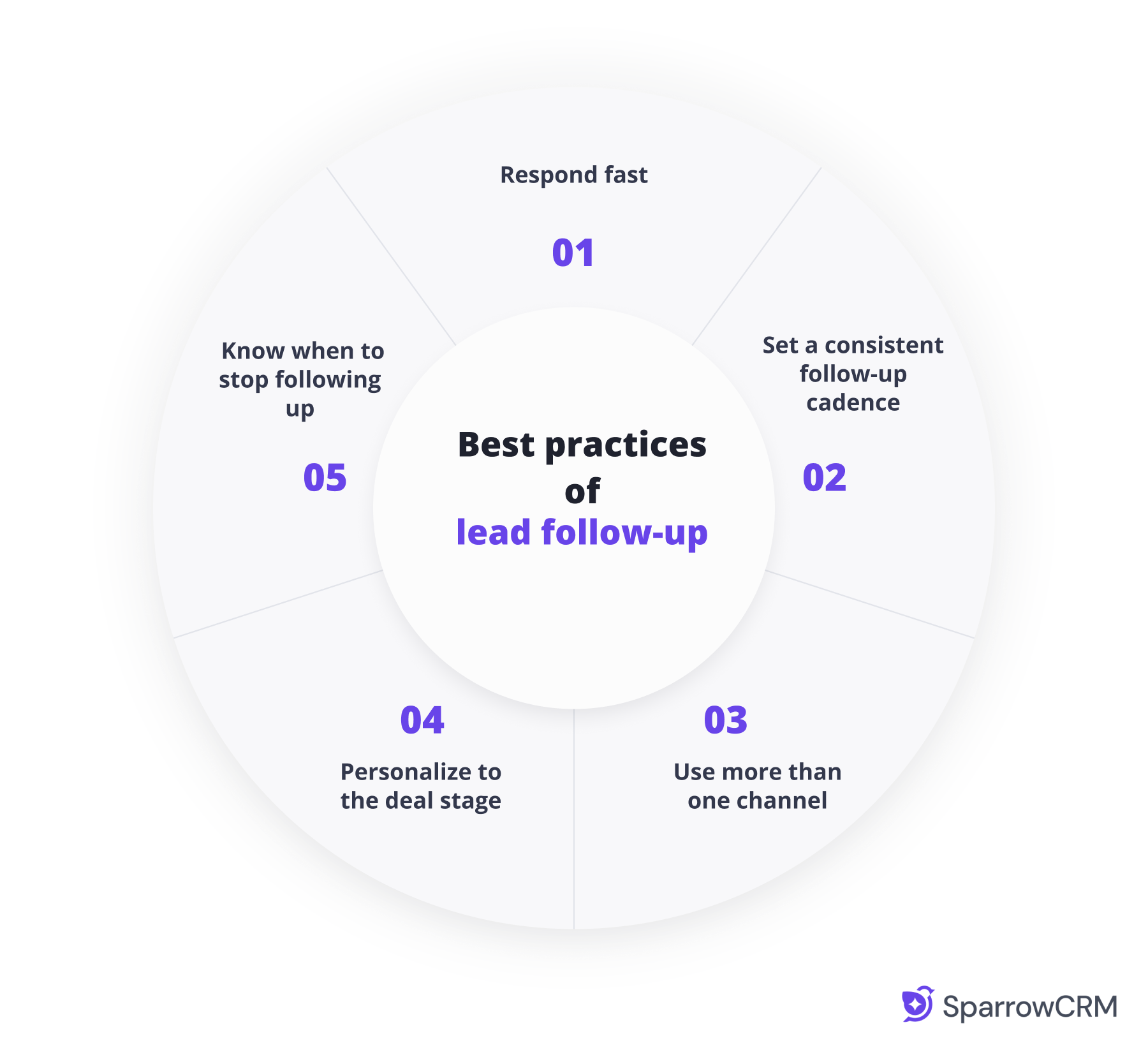
1. Respond fast: the speed-to-lead window
Speed determines almost everything else in lead follow-up. Research from Harvard Business Review found that companies contacting leads within an hour were nearly 7 times more likely to qualify them than those who waited even 60 minutes longer.
If your team is figuring out how to follow up with sales leads effectively, start with one simple rule: respond while the inquiry is still fresh. The longer a lead waits, the more likely they are to lose interest or reach out to a competitor. Assigning leads to the right sales rep instantly removes unnecessary delays and helps conversations begin sooner.
2. Set a consistent follow-up cadence
Most leads won't respond to your first follow-up, and many won't reply to the second or third either. That's why successful sales teams rely on a follow-up cadence: a planned sequence of touchpoints spread over time instead of a one-off message.
A typical cadence includes five to seven touchpoints over two to three weeks, with follow-ups happening more frequently in the first few days and gradually becoming less frequent.
3. Use more than one channel
Not all leads want emails. Some will be more open to a phone call, text message, or LinkedIn message. If you’re only using one channel, you may be missing prospects who simply communicate differently.
Instead, diversify your outreach across multiple channels; send an email, follow up with a call, and then send a short LinkedIn message or text. It makes your follow-ups flow more naturally, helps you get a response, and shows you’re trying to build a real connection.
4. Personalize to the deal stage
Every follow-up should match where the buyer is in the sales journey. A lead after a demo needs different information than someone reviewing a proposal or nearing the end of a free trial.
Instead of sending a generic "just checking in" message, reference your previous conversation, answer their specific questions, or highlight the next step. Relevant, personalized follow-ups are far more likely to get a response than generic reminders.
5. Know when to stop following up
Following up is important, but don't keep chasing a lead forever. If someone hasn't replied after five to seven follow-ups, send one final message and stop reaching out. This helps your sales team focus on leads that are ready to buy while letting the prospect know they can always get back in touch later.
Never Miss a Follow-Up with SparrowCRM
Email follow-up templates (based on situation)
Gentle reminder follow-up
Use this when a lead has gone quiet after showing initial interest: a demo request, a downloaded resource, or an unanswered first email. Keep it short and low-pressure.
Subject: Following up on [Product/Topic]
Hi [First Name],
Wanted to follow up on my last note — I know things get busy. I'm still happy to help if you have any questions about [specific topic or pain point they mentioned].
If now isn't the right time, just let me know, and I'll follow up later.
Best,
[Your Name]
Discovery call email template
Send this to confirm a discovery call and set expectations before the conversation happens.
Subject: Looking forward to our call on [Date]
Hi [First Name],
Confirming our call on [Date] at [Time]. We'll spend about [X] minutes talking through [their goal or challenge] and whether [Product] is a fit for your team.
If it's helpful, feel free to share anything specific you'd like us to cover beforehand.
Talk soon,
[Your Name]
After proposal sent
Send these two to three days after a proposal to check in without pressuring a decision.
Subject: Checking in on the proposal
Hi [First Name],
Wanted to check if you've had a chance to review the proposal I sent over. Happy to walk through pricing, timeline, or any section that needs adjusting based on what your team needs.
What questions can I answer?
Best,
[Your Name]
Before free trial ends
Send these two to three days before a trial expires, focused on what the lead has actually used.
Subject: Your trial ends in [X] days
Hi [First Name],
Your trial wraps up on [Date]. Based on what you've set up so far [reference a specific action, e.g., "your pipeline stages"], it looks like [feature] has been the most useful part.
Want to hop on a quick call to talk through next steps, or would you rather I send pricing details directly?
Best,
[Your Name]
Objection handling email
Use this when a lead has raised a specific concern about budget, timing, or a competing tool, rather than going silent.
Subject: Re: [Their objection or concern]
Hi [First Name],
Totally understand the concern about [specific objection]. A few other teams in [industry] have run into the same thing, and here's how they worked through it: [one line specific to the objection].
Would it help to talk through how this would look for your team specifically?
Best,
[Your Name]
Deal lost template
Send this when a deal is formally marked closed-lost, to leave the door open without pushing.
Subject: No worries — keeping in touch
Hi [First Name],
Thanks for considering [Product]. I understand the timing isn't right. I'll check back in a few months in case things change, but feel free to reach out sooner if anything shifts on your end.
Wishing you the best with [their chosen direction or priority].
Best,[Your Name]
How AI enhances lead follow-up?
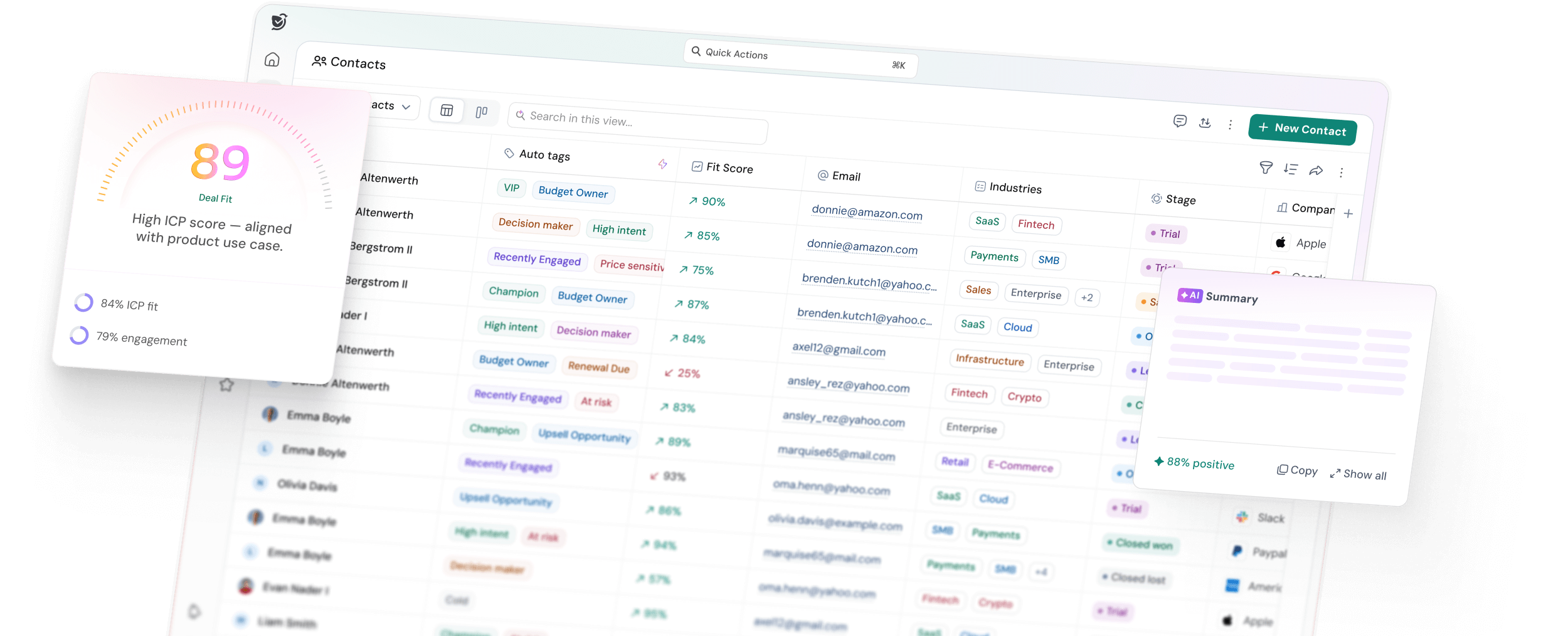
- Improves lead prioritization: AI tracks behavior continuously email opens, repeat visits, pricing page views and surfaces which leads are showing real buying signals right now, so reps follow up with the leads most likely to respond instead of working through a list in order.
- Reduces manual work in follow-up: Instead of a rep deciding when to check in on every lead, AI flags the exact moment a follow-up is due based on behavior, not a fixed day-count rule. This removes the manual tracking and guesswork that eats up a rep's day.
- Improves message relevance at scale: AI can draft a first-pass follow-up personalized to the lead's deal stage and prior conversation, which a rep then reviews and sends. This keeps messaging specific to the lead instead of generic, even across a large pipeline.
- Reduces response delay: AI catches leads that have gone quiet longer than expected and flags them for a different follow-up angle, rather than letting them sit until someone happens to notice. This closes the gap between when a lead needs attention and when a rep actually gives it.
- Improves consistency without losing personalization: Every lead gets the same standard of follow-up regardless of rep workload, while the message itself still reads as specific to that lead, not a mass, templated blast.
Final thoughts
Lead follow-up isn't won with a single perfect email; it's won with a system that responds quickly, stays consistent, and adjusts to where a lead actually is in their decision. The best practices above, paired with templates built for specific moments rather than generic check-ins, turn follow-up from a guessing game into a repeatable process.
Whether your team is refining an existing cadence or building a lead follow-up system from scratch, the goal stays the same: never let a real opportunity go cold because nobody followed up, and never let a lead feel chased because everybody did.